
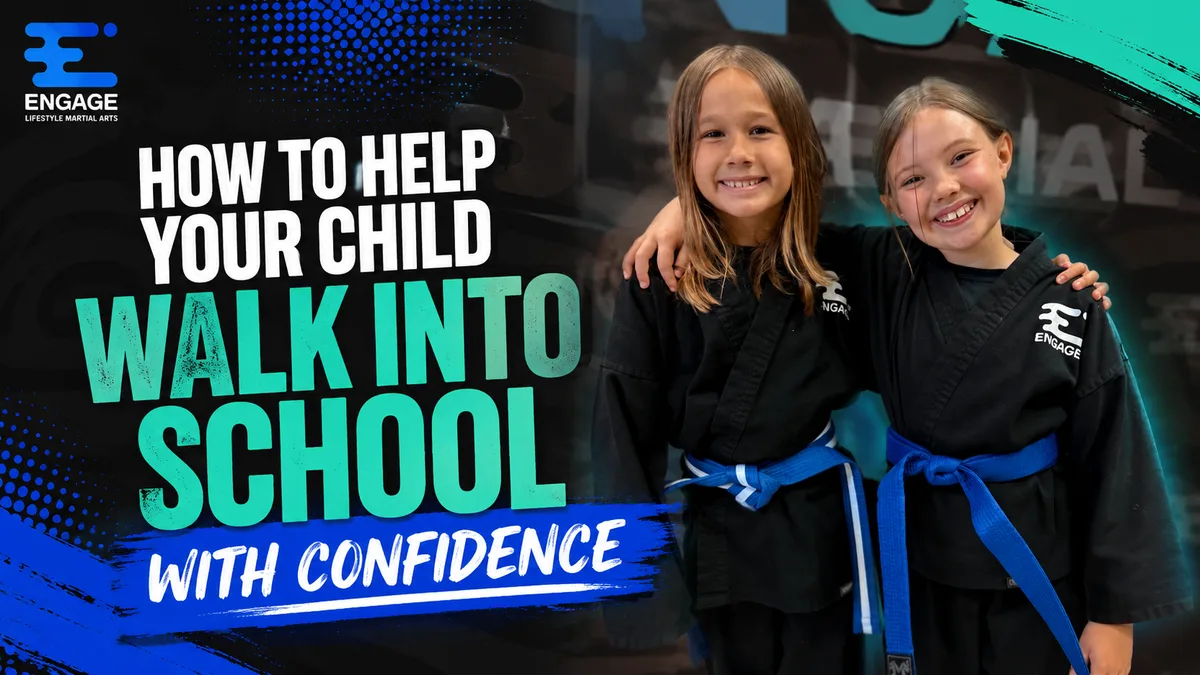
How to Help Your Child Walk Into School With Confidence
The first days of school can bring out a lot of emotions.
Excitement.
Nervousness.
Curiosity.
Uncertainty.
For some children, walking into a new classroom feels like an adventure.
For others, it feels like stepping into a room where everyone already knows what to do except them.
They may worry about meeting new classmates.
They may hesitate to ask a question.
They may feel nervous speaking to a teacher.
They may avoid trying something new because they are afraid of getting it wrong.
Parents naturally want to help.
We remind them that they will be okay.
We tell them to be brave.
We encourage them to feel confident.
But real confidence is not something children can simply switch on because an adult tells them to.
Real confidence is built through preparation, practice, and experience.
Confidence Is Not Pretending You Are Never Nervous
A confident child can still feel nervous.
They can still wonder whether someone will like them.
They can still worry about making a mistake.
Confidence does not mean those feelings disappear.
It means the child knows what to do even when those feelings show up.
A child with real confidence may think:
“I feel nervous, but I can introduce myself.”
“I do not understand this yet, but I can ask for help.”
“I might make a mistake, but I can still try.”
That is the kind of confidence children can carry into a new school year and into every new situation that follows.
Prepare for the Moments That Feel Uncomfortable
One of the best ways to help children feel more confident is to practice the moments they are worried about before they happen.
Children often become anxious when they do not know what to expect or what to say.
A little preparation gives them a plan.
You can practice:
- Introducing themselves to a new classmate
- Asking where something belongs
- Telling a teacher they need help
- Joining a game at recess
- Answering a question in class
- Responding when they make a mistake
- Asking someone to repeat an instruction
These role-playing moments may feel simple, but they give children language they can use when nerves make it difficult to think.
Instead of only saying, “Go make a friend,” help them practice:
“Hi, my name is Jordan. What is your name?”
“Can I sit here?”
“What game are you playing?”
“Can I join you?”
Preparation does not remove every uncomfortable feeling.
It gives children a way through it.
Help Them Meet New Classmates
Meeting new people can feel difficult, especially for children who need time to warm up.
The goal is not to turn every child into the most outgoing person in the room.
The goal is to help them feel capable of making one small connection.
Encourage your child to begin with simple actions:
- Smile
- Say hello
- Ask one question
- Notice something they have in common
- Sit near someone new
- Offer help
- Invite someone to join an activity
Children do not need to become friends with everyone on the first day.
One positive interaction is enough to start building comfort.
Parents can also help by avoiding labels such as “shy” or “not social.”
Children often begin to believe the labels adults repeat about them.
Instead, try:
“You sometimes need a little time to feel comfortable, and that is okay.”
“You are learning how to meet new people.”
“You can start with one hello.”
That language leaves room for growth.
Teach Them How to Ask Questions
Some children stay quiet because they are afraid their question will sound silly.
Others worry that asking for help means they are not smart enough.
This can create unnecessary frustration in the classroom.
Children need to understand that asking a question is not a sign of weakness.
It is a sign that they are paying attention and taking responsibility for their learning.
Teach them a few simple phrases:
“Can you explain that again?”
“Am I doing this correctly?”
“What should I do next?”
“Can you show me an example?”
“I do not understand this part yet.”
The word “yet” matters.
It reminds children that understanding can grow.
At home, respond positively when your child asks thoughtful questions. You can say:
“That was a good question.”
“I like that you asked instead of guessing.”
“You took responsibility for understanding.”
Over time, children begin to see questions as tools rather than risks.
Practice Speaking to Teachers
Teachers want children to communicate with them.
But many children feel intimidated speaking to an adult they do not know well.
They may look at the floor.
Speak too quietly.
Wait until the problem becomes much bigger.
Parents can help by practicing respectful, clear communication.
Encourage children to:
- Look toward the teacher
- Use a clear voice
- Explain the problem simply
- Listen to the response
- Say thank you
A child might practice saying:
“Excuse me, I cannot find my folder.”
“I am confused about this direction.”
“I need help with something that happened at recess.”
“I forgot my homework. What should I do?”
These skills help children become more independent.
They also teach children that trusted adults are there to support them.
Build Confidence Through Trying New Things
Trying something new always includes uncertainty.
A new assignment.
A new game.
A new classmate.
A new activity.
Children who believe they must succeed immediately often avoid new experiences.
They wait until they feel certain.
But certainty usually comes after trying, not before.
Help your child understand that the first attempt is not supposed to be perfect.
The first attempt is information.
It shows them what feels easy. What feels hard. What they need to practice.
When your child tries something new, avoid focusing only on the outcome.
Instead of asking, “Did you get it right?” try:
“What did you learn?”
“What was the hardest part?”
“What would you try differently next time?”
“What are you proud of?”
Those questions teach children that success is not limited to a perfect result.
Growth counts too.
What Confidence Looks Like at Different Ages
Ages 5–7
Younger children often need confidence broken into small, specific actions.
They may benefit from practicing how to:
- Walk into the classroom
- Greet the teacher
- Put away their belongings
- Ask where something goes
- Join one activity
- Try again after a mistake
At this age, predictable routines create a sense of safety.
Celebrate small moments of independence.
“I noticed you carried your own backpack.”
“You asked that question clearly.”
“You tried even though you felt nervous.”
Those moments become building blocks.
Ages 8–12
Older children become more aware of how others may see them.
They may worry about fitting in, looking embarrassed, or saying the wrong thing.
Confidence at this age often involves:
- Speaking up respectfully
- Handling social uncertainty
- Asking for help without feeling ashamed
- Trying something they may not be good at yet
- Recovering after an awkward moment
- Staying true to themselves around peers
Older children need reminders that one uncomfortable interaction does not define them.
They are allowed to learn socially just as they learn academically.
Give Them Responsibilities Before School Starts
Confidence grows when children experience themselves as capable.
Age-appropriate responsibility helps create that experience.
Let your child take ownership of parts of the school routine. They might:
- Pack their backpack
- Fill their water bottle
- Choose their clothes
- Check a school list
- Prepare a snack
- Organize supplies
- Set an alarm
- Help plan the morning routine
Parents can still provide support.
The goal is not to leave children on their own. It is to let them participate in their own preparation.
A child who has practiced responsibility at home often feels more capable when they walk into school.
Use Encouragement That Builds Real Confidence
Children do not need constant reassurance that everything will be easy.
They need encouragement that reminds them they can handle what comes.
Instead of: “Do not be nervous.”
Try: “It is okay to feel nervous. You know what to do.”
Instead of: “Everyone will love you.”
Try: “You can be kind, ask questions, and give friendships time to grow.”
Instead of: “You will do great.”
Try: “You are prepared, and you can handle mistakes if they happen.”
This kind of encouragement is honest.
It does not promise a perfect day. It reminds children they have tools.
Why Structured Activities Help
Confidence grows when children repeatedly practice focus, communication, problem-solving, and persistence.
Structured activities such as sports, music, theater, dance, clubs, and martial arts give children opportunities to:
- Meet new people
- Listen to coaches and instructors
- Ask questions
- Try unfamiliar skills
- Receive feedback
- Recover from mistakes
- Work toward meaningful goals
The specific activity matters less than the environment.
Children benefit from adults who provide clear expectations, positive coaching, appropriate challenges, and consistent encouragement.
At Engage Lifestyle Martial Arts in Henderson, students practice these skills every week.
They learn how to enter a group, communicate respectfully, work with partners, try difficult things, and continue after mistakes.
Martial arts is one way children can rehearse the confidence they will use in classrooms, friendships, and future challenges.
The Confidence They Can Carry With Them
Parents cannot remove every nervous feeling from a child’s school experience.
We cannot guarantee that every conversation will go smoothly.
We cannot prevent every mistake, awkward moment, or difficult day.
But we can prepare children to handle those moments.
We can teach them how to introduce themselves.
How to ask questions.
How to speak to trusted adults.
How to try something new.
How to recover when things do not go as planned.
That is real confidence.
Not pretending fear does not exist. Not waiting until success is guaranteed.
Real confidence is knowing:
“I can walk in.”
“I can ask.”
“I can try.”
“I can learn.”
“And if something is hard, I can keep going.”
Those are the skills that help children walk into school with confidence.
They are also the skills they will carry far beyond the classroom.