THE ENGAGE FAMILY GUIDE · NO-SCHOOL DAYS
Bow In, Bow Out: How to Keep Kids Steady on No-School Days
A fixed start, a fixed finish, and one kept commitment. A simple way to keep kids steady when school is out.
It's 9:40 on a Tuesday morning. Your child is still in pajamas, the TV has been on since seven, and someone has already asked what's for lunch. School is closed, and somehow the day already feels long.
If your child attends a Clark County School District school, you'll see a few more days like that this month.
The instinct is to fill those days. But kids usually don't need a packed schedule on a day off. They need a couple of fixed points that don't move. Pick a set wake-up time and one commitment your child keeps no matter what, then let the rest of the day stay flexible.
Why Kids Struggle When the Schedule Disappears
School days come with built-in structure. There's a time to arrive, a time to eat, a time to work, and a time to go home. Children rarely notice that structure until it's gone.
When a day has no shape, many kids drift. They get restless by mid-morning and frustrated by late afternoon. That isn't misbehavior. It's what happens when nobody, including the child, knows what the day is for.
The answer isn't to recreate a school day at home. It's to give the day a beginning and an end.
Borrow a Lesson From the Dojo: Bow In, Bow Out
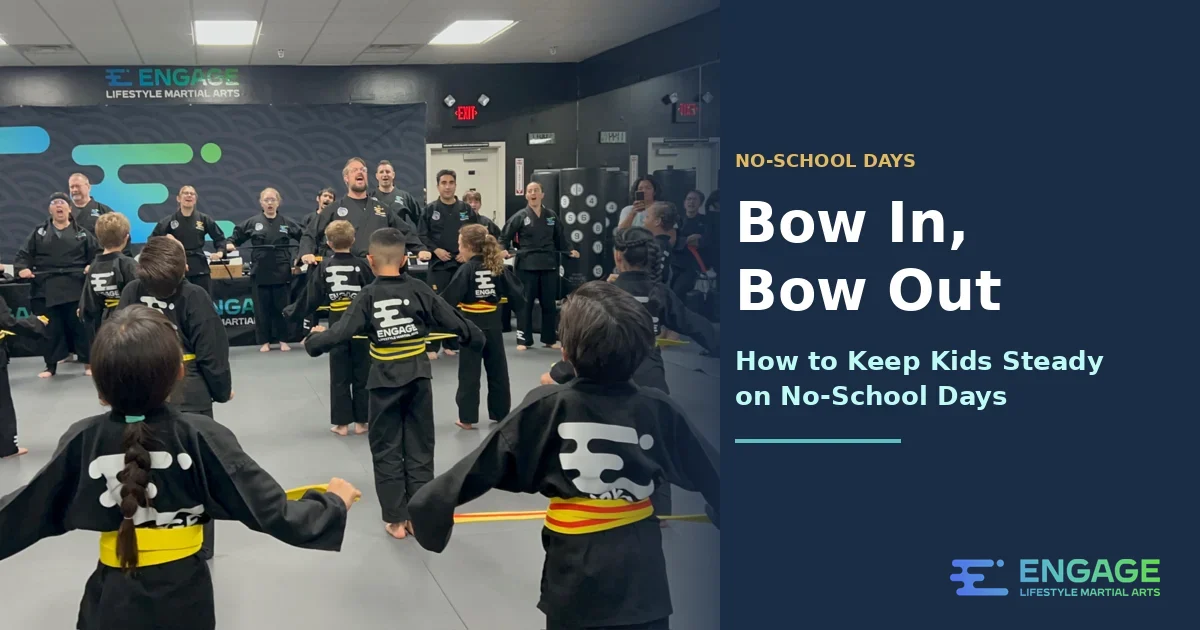
Martial arts classes traditionally begin and end with a bow. What happens in the middle changes from class to class. The bookends don't.
That bow tells students two things: we're starting now, and later, we're finished.
A no-school day can work the same way.
Bow in: Wake up at a consistent time, get dressed, and eat breakfast. It doesn't need to be early, just predictable.
Bow out: Close the day the same way you usually do. Dinner, a little reading, and a bedtime close to normal.
Everything in between can be loose. Play, visit family, enjoy a movie, or pick from our screen-free holiday ideas. The bookends keep the day from drifting.
Choose One Commitment That Doesn't Move
The second anchor is one thing your child does on a day off, whether anyone requires it or not.
- Reading for 20 minutes.
- Practicing an instrument or a skill they're learning.
- A daily job, like feeding the dog or making their bed.
- Showing up for an activity that's already on the calendar.
Keeping a commitment on a day when nothing is required is its own kind of practice. It's self-discipline in its simplest form: doing what you said you'd do, even when no one is checking.
When the Anchor Is Class, and When It Isn't
For Engage families, Nov 3 and Nov 11 are regular class days. School is closed, but class happens at its usual time. That makes it an easy anchor, and it shows children that some commitments hold steady even when everything else shifts.
Thanksgiving week is different. Engage is closed Nov 25 through Nov 28, and classes resume Dec 1. That gives families a chance to teach the harder version of the lesson: the dojo is closed, but the habit doesn't have to be.
- Spend five minutes practicing a technique they're working on.
- Teach a grandparent or cousin something they learned in class.
- Stretch together before the big meal.
A small piece of routine kept alive over the break often makes stepping back onto the mat a little easier.
Your November Anchor Plan
Tap a day to see a simple plan. Switch ages to see how ownership changes.
Tue, Nov 3 · Election Day
- Bow In
- Wake at the usual school time plus 30 minutes, then dress and eat before any screens.
- One Commitment (Ages 5 to 7)
- Class is the anchor. Have them lay out their uniform and belt by lunch with your help.
- Bow Out
- Ask, "What did you work on in class today?" Then bedtime as normal.
Wed, Nov 11 · Veterans Day
- Bow In
- Same wake time as Nov 3, so the second day off feels familiar.
- One Commitment (Ages 5 to 7)
- Draw a thank-you picture for a veteran they know or a local veterans group, plus class in the afternoon.
- Bow Out
- Share the picture or note at dinner. Bedtime as normal.
Wed, Nov 25 · No school
- Bow In
- Holiday week starts. Keep the wake time within an hour of normal.
- One Commitment (Ages 5 to 7)
- First day without class: five minutes of practicing one technique with you watching.
- Bow Out
- Ask, "What did you practice today?"
CCSD lists Nov 25 as a possible make-up school day, so check the district calendar.
Thu–Fri, Nov 26–27 · Thanksgiving
- Bow In
- A slower start is fine. Keep one familiar morning step, like getting dressed before relatives arrive.
- One Commitment (Ages 5 to 7)
- Show a family member one move or the class bow.
- Bow Out
- A calmer evening and a bedtime close to normal. Classes resume Dec 1.
Your child's class days may differ. This is an example plan.
What This Looks Like by Age
Ages 5 to 7: You choose the anchors. Keep them simple and visual, like a three-picture card for "wake up," "my one job," and "bedtime." Celebrate when the one job gets done.
Ages 8 to 12: Let your child choose their own commitment and decide when it happens. At bow out, ask: "Did you do what you planned today?" Ownership grows when children make the plan themselves.
The Goal Isn't a Perfect Day
Some days off will go sideways. The movie runs long, relatives arrive early, and lunch happens at two. That's fine.
If the day had a start, a finish, and one kept promise, it was a good day. And tomorrow morning, your child gets to bow in again.
The Engage Takeaway
A Day Needs a Start and a Finish
Kids don't need every hour planned. They need a predictable beginning, a predictable end, and one promise they keep in between. That is how a day off becomes practice in self-discipline.
Confidence • Character • Connection • Community

At Engage Lifestyle Martial Arts in Henderson, children practice showing up, following through, and building confidence one class at a time. If you'd like to see how structured martial arts training can help your child grow into the best version of themselves, we invite your family to try three complimentary classes at EngageLMA.com.