
The game is almost over.
One child is celebrating. Another is upset. Someone is convinced the rules weren't fair, and suddenly a fun family activity has turned into an argument.
Sound familiar?
With holiday gatherings, cousins visiting, and family game nights becoming more common, children have plenty of opportunities to experience competition.
And while winning can be exciting, losing can bring out some big emotions.
But here's something worth remembering:
Learning how to win and lose with respect is a skill, and like any skill, children need opportunities to practice it.
That's one reason sportsmanship is such an important part of martial arts training.
Why Losing Can Feel So Difficult for Kids
For children, losing isn't always just about the game.
Sometimes it feels embarrassing. Sometimes it's frustrating. Sometimes they worry that losing means they aren't good at something.
Younger children may have a harder time separating the result of a game from how they feel about themselves.
Older children may understand competition better but still struggle with disappointment, comparison, or wanting to impress others.
Instead of immediately saying, "It's just a game," try acknowledging the feeling.
"I know you really wanted to win. It's disappointing when things don't go the way you hoped."
That doesn't mean accepting disrespectful behavior.
It means helping your child understand that feeling disappointed is okay, while yelling, blaming, or treating others poorly isn't.
Winning Gracefully Is Just as Important
We often focus on teaching children how to handle losing.
But winning comes with responsibilities, too.
A child who wins a game might feel proud, excited, or eager to celebrate.
Those feelings are completely natural.
The lesson is learning to celebrate without making someone else feel small.
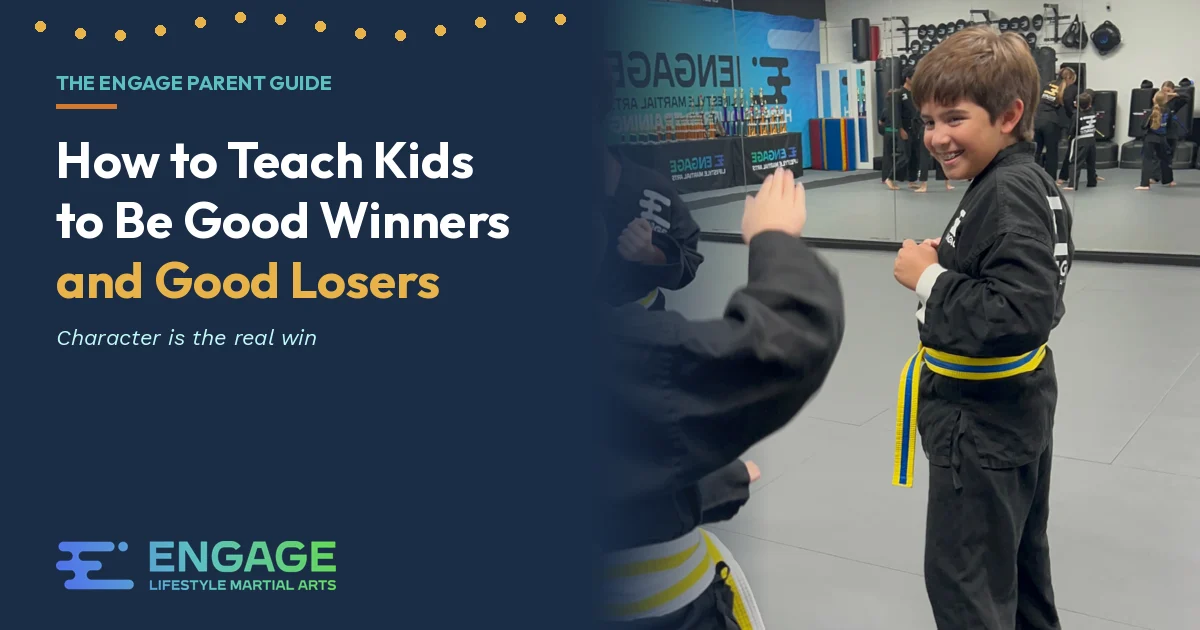
In martial arts, students may perform a technique more successfully than a partner or do well during a competitive activity.
We want them to feel proud of their effort while continuing to show respect for the person training beside them.
Parents can reinforce that same idea at home.
Encourage children to:
- Celebrate without teasing.
- Congratulate other players.
- Recognize someone else's effort.
- Remember that winning doesn't make them better than another person.
A good winner knows how to feel proud without putting someone else down.
What Martial Arts Teaches About Sportsmanship
At Engage Lifestyle Martial Arts, students learn that respect isn't something we practice only when things are going our way.
It's part of how we train.
During partner drills, sparring, and other training activities, students have opportunities to practice control, patience, encouragement, and respect.
Sometimes they're successful.
Sometimes a partner performs better.
Sometimes a technique doesn't work the way they expected.
Each experience creates an opportunity to learn.
A student might need to take a moment after a difficult round, listen to feedback, or congratulate a training partner.
These moments help children understand an important distinction:
The outcome tells you what happened. Your response shows your character.
And that lesson matters just as much during a family board game as it does on the martial arts mats.
"Respect matters more than the result."
Win or lose, we treat our training partners with respect.
Teach Kids What to Do After They Lose
Children often need specific tools for handling disappointment.
Rather than expecting them to automatically know how to be a good sport, practice a simple routine together.
Pause. Breathe. Respond.
First, encourage your child to pause before reacting.
Next, help them take a breath and recognize what they're feeling.
Finally, practice a respectful response.
That might sound like:
"Good game."
"That was a close one."
"I want to try again."
You can even practice these phrases before a family game begins.
For younger children, ages 5–7, model the words and keep expectations simple.
For older children, ages 8–12, ask them to reflect on how they handled the result and what they might do differently next time.
Remember that children may need a little time to calm down before they can genuinely congratulate someone.
The goal is to teach a skill, not force an immediate performance.
WHAT WOULD YOU SAY?
"Help your child practice sportsmanship before the next family game night."
Scenario 1 of 3
You Lost the Game
"Your cousin wins, and you're disappointed. What could you say?"
Make Sportsmanship Part of Family Fun
Holiday games can be a great opportunity to practice these lessons without turning every activity into a serious competition.
Before playing, agree on a few simple expectations:
- Everyone follows the same rules.
- We celebrate respectfully.
- We don't tease someone who loses.
- We congratulate others.
- We can feel disappointed and still be kind.
Parents can model these behaviors, too.
When you lose, show your child what a respectful response looks like.
When you win, celebrate without making the other person feel bad.
And when a child demonstrates good sportsmanship, recognize it.
"I noticed you congratulated your cousin even though you were disappointed. That showed a lot of character."
That kind of recognition helps children understand that how they play matters, not just whether they win.
WHAT MAKES A TRUE GOOD SPORT?
"Winning is exciting, but character is something we can practice every time."
The Real Victory Is Who They're Becoming
Children won't win every game, every match, or every challenge.
And that's okay.
Competition gives them opportunities to experience excitement, disappointment, perseverance, and personal growth.
The important lesson isn't that winning doesn't matter.
It's that winning isn't the only thing that matters.
At Engage Lifestyle Martial Arts in Henderson, Nevada, we help children develop confidence, character, connection, and community through age-appropriate training.
We want students who can work hard, celebrate success, learn from setbacks, and treat others with respect.
Because the greatest victory isn't always the one on the scoreboard.
Sometimes it's the character a child shows when the game is over.
Martial arts is the tool. Character is the mission.